Home › Mahālakṣmī Aṣṭakam › Verse 8
The verse
॥ श्लोक ८ ॥
श्वेताम्बरधरे देवि नानालङ्कारभूषिते।
जगत्स्थिते जगन्मातर्महालक्ष्मि नमोऽस्तु ते॥
॥ श्री महालक्ष्म्यै नमः ॥
Śvetāmbara-dhare devi nānālaṅkāra-bhūṣite,
Jagat-sthite jagan-mātar mahālakṣmi namo 'stu te.
Meaning in short
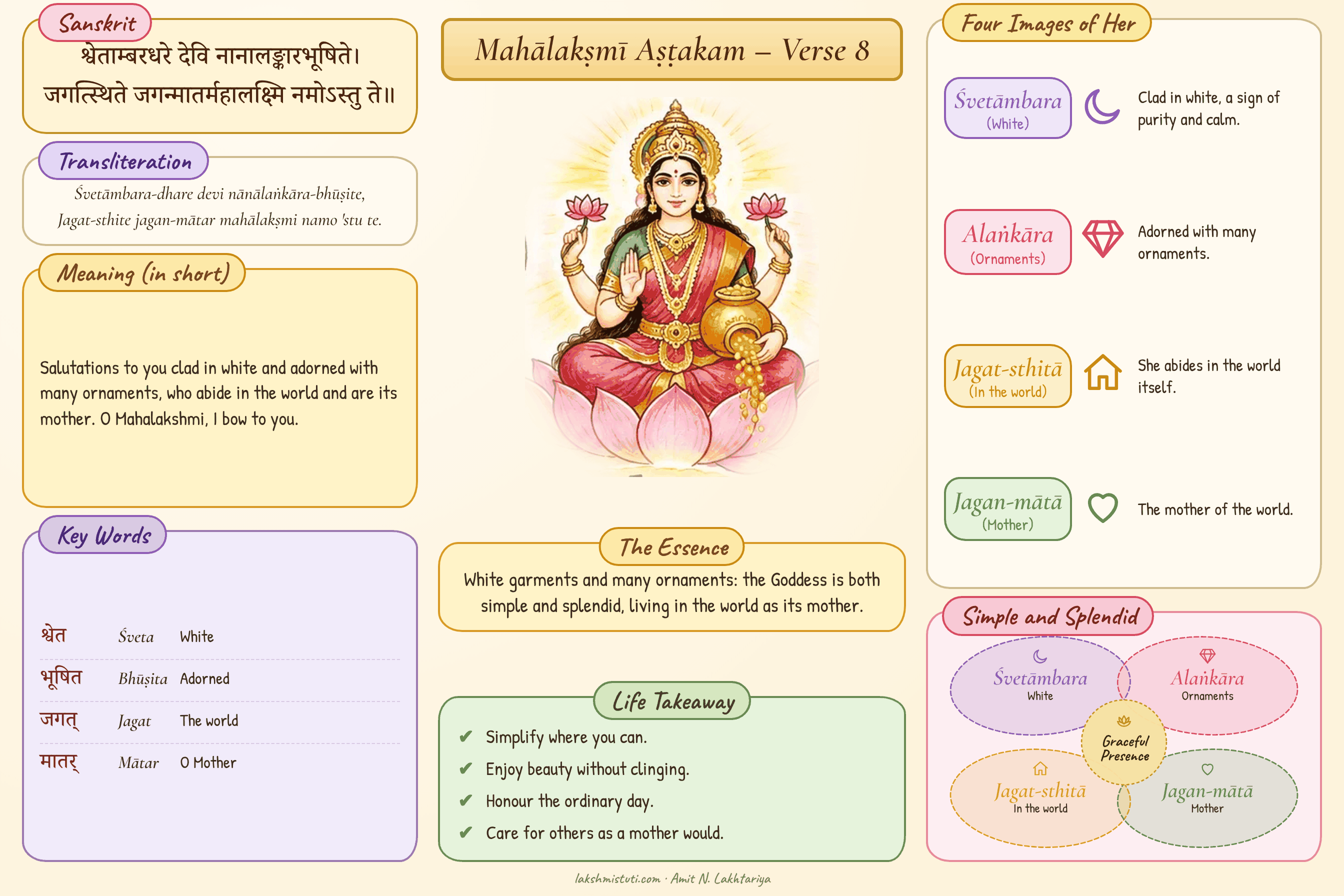
Salutations to you, O Goddess clad in white garments and adorned with many ornaments, who abide in the world and are its mother. O Mahalakshmi, I bow to you.
White garments and many ornaments: the Goddess is pictured as simple and splendid at once, present in the world as its mother.
Key highlights
- Śvetāmbara White: clad in white garments
- Alaṅkāra Ornaments: adorned with many ornaments
- Jagat-sthitā In the world: she abides in the world
- Jagan-mātā Mother: the mother of the world
Explore the four images
Tap a card to open its meaning and a question to carry with you.
ŚvetāmbaraWhite
White is the colour of purity and calm in many Indian traditions. This verse describes the Goddess in white. The hymn gives simplicity a place in her picture.
Pause and reflect: Where could I simplify and feel lighter?
AlaṅkāraOrnaments
Nānā-alaṅkāra means many ornaments. Beauty and richness are not hidden in this picture. The hymn sets white simplicity and many ornaments side by side without choosing between them.
Pause and reflect: Can I enjoy good things without being owned by them?
Jagat-sthitāIn the world
Jagat-sthite means one who abides in the world. She is not far away. The verse places her inside the world itself, not only in a temple or a story.
Pause and reflect: Where in an ordinary day can I notice something worth honouring?
Jagan-mātāMother
Jagan-mātar, mother of the world, also closes the previous verse. Here the whole picture, dress and ornaments, is gathered under that one tender name.
Pause and reflect: How can I treat the people in my care as a mother would?
Sketch note
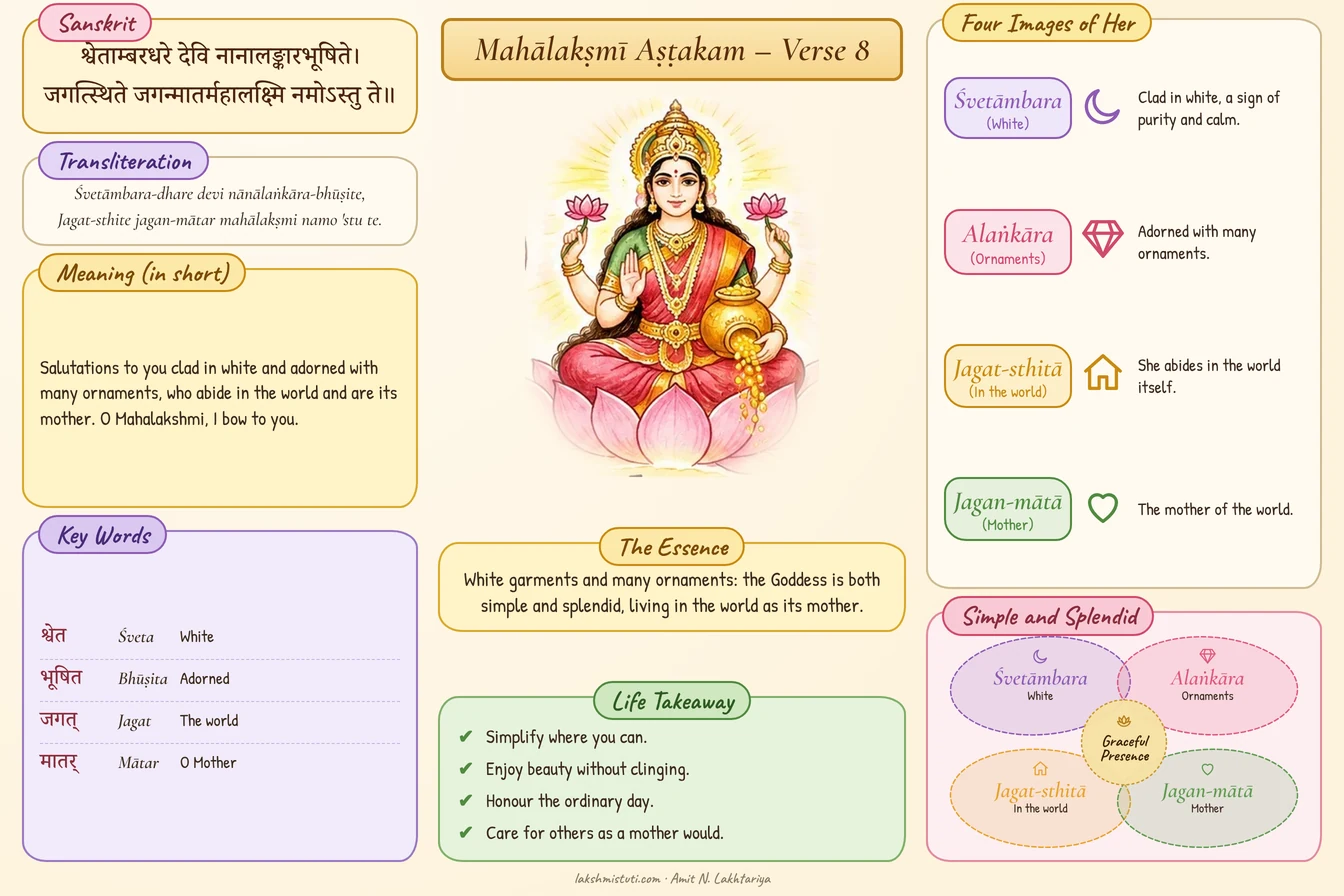
A one-page summary of the verse: Sanskrit, meaning, key ideas, key words and a takeaway. On a phone, open it full screen.
Word-by-word meaning
The literal meaning of each word.
| Sanskrit | Meaning |
|---|---|
| श्वेताम्बरधरेŚvetāmbara-dhare | O you who wear white garments |
| नानालङ्कारभूषितेNānālaṅkāra-bhūṣite | O you adorned with many ornaments |
| जगत्स्थितेJagat-sthite | O you who abide in the world |
| जगन्मातःJagan-mātaḥ | O Mother of the world |
| महालक्ष्मिMahālakṣmi | O Mahalakshmi |
Notes on each word
Śveta is white; ambara is cloth or garment; dhara is wearing.
Nānā is various; alaṅkāra is ornament; bhūṣita is adorned.
Sthita is standing, abiding, established. She is present in the world and sustains it.
Repeated from the seventh verse.
The refrain.
Deeper spiritual insights
Interpretation and reflection: ideas that help us read the verse, not part of the text itself.
In simple words
The eighth verse paints a final picture: white garments, rich ornaments, the world as her place and the whole world as her child. It closes the hymn with an image of simplicity and abundance together.
White and ornaments
White suggests purity and simplicity; ornaments suggest richness. The verse gives both without any sense of conflict. That is a gentle idea of prosperity: abundance that stays clean.
A note
A note on colour
This hymn describes the Goddess in white. Popular images of Lakshmi, especially at Diwali, often show her in red or pink. The tradition has many forms of the Goddess, and different texts and temples describe different ones.
Practical meditation
- Minute 1Breathe and settle.
- Minute 2Recite the whole eight-verse hymn in your mind, one image per verse.
- Minute 3Choose the image that stayed with you most.
- Minute 4Carry it into the next hour.
Reflection for today
Which image in this hymn spoke to me most: the bow, the fear removed, the all-knowing mother, the lotus, the white garment? What does that say about what I am looking for?
The eight verses end as they began, with a bow. In between they have shown the Goddess as protector, giver, primal power, supreme mother.
This meditation is a devotional practice for attention and reflection; it does not promise a supernatural result or guarantee material wealth.