Home › Mahālakṣmī Aṣṭakam › Verse 3
The verse
॥ श्लोक ३ ॥
सर्वज्ञे सर्ववरदे सर्वदुष्टभयङ्करि।
सर्वदुःखहरे देवि महालक्ष्मि नमोऽस्तु ते॥
॥ श्री महालक्ष्म्यै नमः ॥
Sarvajñe sarva-varade sarva-duṣṭa-bhayaṅkari,
Sarva-duḥkha-hare devi mahālakṣmi namo 'stu te.
Meaning in short
Salutations to you, O all-knowing one, giver of all boons, terror of all wicked beings and remover of all sorrows. O Goddess Mahalakshmi, I bow to you.
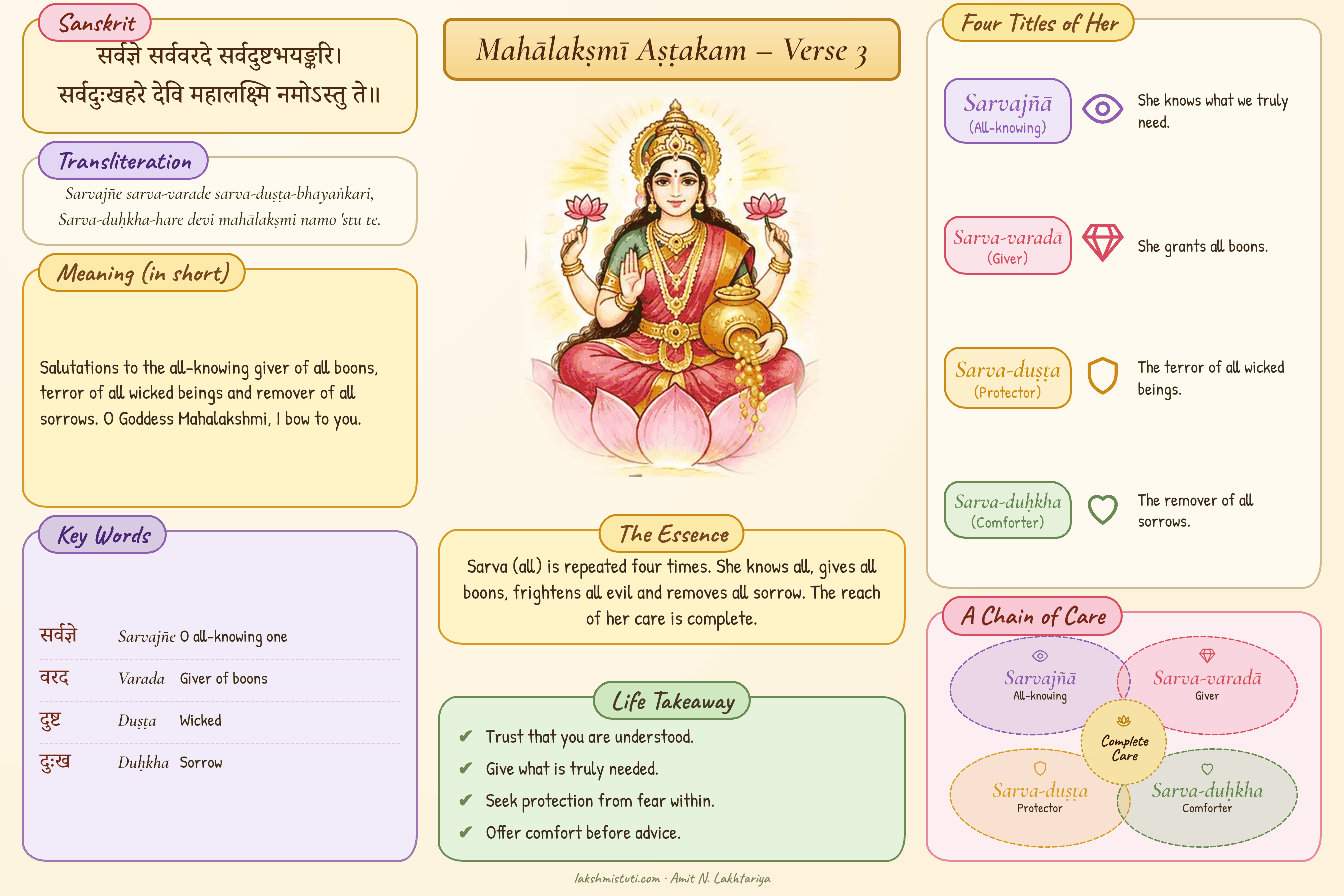
One word, sarva (all), repeated four times: the Goddess is pictured as complete in knowing, giving, protecting and comforting.
Key highlights
- Sarvajñā All-knowing: she knows what we truly need
- Sarva-varadā Giver: she grants all boons
- Sarva-duṣṭa Protector: the terror of all wicked beings
- Sarva-duḥkha Comforter: the remover of all sorrows
Explore the four titles
Tap a card to open its meaning and a question to carry with you.
SarvajñāAll-knowing
The verse begins with knowledge: she knows. A reader may find rest in this. The prayer does not need to be perfectly worded, because it is addressed to someone who already understands.
Pause and reflect: What would I ask for if I trusted that I am already understood?
Sarva-varadāGiver
Because she knows what we need, she can give it. Varada means the giver of boons. The hymn pictures giving as the natural next step after understanding.
Pause and reflect: Do I give to others what they need, or what I assume they need?
Sarva-duṣṭaProtector
The wicked here can be read as outer harm or as inner ones such as greed and fear. She is called their terror, which means the tradition sees her as protecting those who turn to her.
Pause and reflect: What do I need protection from, outside or within?
Sarva-duḥkhaComforter
The chain ends with comfort. Having known, given and protected, she removes sorrow. The order can be read as a quiet logic: understanding first, relief last.
Pause and reflect: Who around me needs comfort more than advice today?
Sketch note
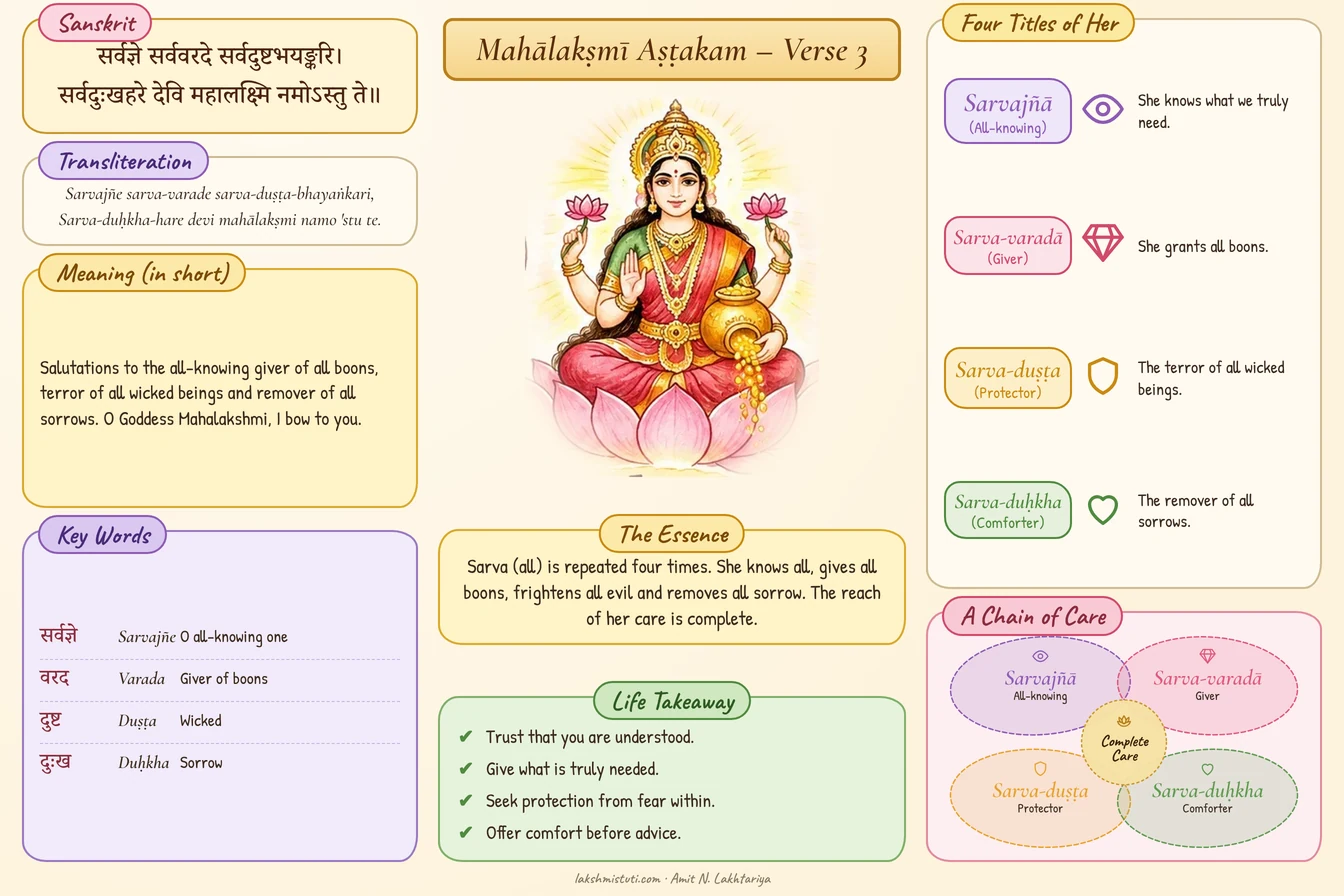
A one-page summary of the verse: Sanskrit, meaning, key ideas, key words and a takeaway. On a phone, open it full screen.
Word-by-word meaning
The literal meaning of each word.
| Sanskrit | Meaning |
|---|---|
| सर्वज्ञेSarvajñe | O all-knowing one |
| सर्ववरदेSarva-varade | O giver of all boons |
| सर्वदुष्टभयङ्करिSarva-duṣṭa-bhayaṅkari | O terror of all wicked beings |
| सर्वदुःखहरेSarva-duḥkha-hare | O remover of all sorrows |
| देवि महालक्ष्मिDevi mahālakṣmi | O Goddess Mahalakshmi |
Notes on each word
Sarva is all; jña is one who knows.
Vara is a boon or blessing; da is giver.
Duṣṭa is one of evil intent; bhayaṅkari is one who causes fear.
Duḥkha is sorrow, pain, suffering.
Vocatives.
Deeper spiritual insights
Interpretation and reflection: ideas that help us read the verse, not part of the text itself.
In simple words
This verse is built on the word sarva, “all”, repeated four times. She knows all, gives all boons, frightens all evil and removes all sorrow. The poet is making the Goddess’s reach complete.
A chain of reasoning
Notice the order. Because she is all-knowing, she knows what we truly need. Because she grants boons, she can give it. Because she frightens the wicked, we are protected. Because she removes sorrow, we are comforted. The four titles can be read as one logical chain.
Why “all-knowing” comes first
We usually pray for outcomes. The verse begins with knowledge: that she knows. A reader may find rest in that: the prayer does not need to be perfectly worded, because it is addressed to someone who already understands.
Practical meditation
- Minute 1Sit still and breathe.
- Minute 2Recite the verse slowly; on each sarva pause for one breath.
- Minute 3Bring to mind one worry and hand it over in your mind, without asking for a specific outcome.
- Minute 4Rest in silence.
Reflection for today
Is there a worry I keep rehearsing that I could simply place before the one who is said to know all? What would I do differently if I trusted that I had been understood?
Four times the verse says “all”, and each time it widens the circle of care. It is a reminder that a prayer can be an act of letting go.
This meditation is a devotional practice for attention and reflection; it does not promise a supernatural result or guarantee material wealth.