Home › Mahālakṣmī Aṣṭakam › Verse 5
The verse
॥ श्लोक ५ ॥
आद्यन्तरहिते देवि आद्यशक्तिमहेश्वरि।
योगजे योगसम्भूते महालक्ष्मि नमोऽस्तु ते॥
॥ श्री महालक्ष्म्यै नमः ॥
Ādyanta-rahite devi ādya-śakti-maheśvari,
Yogaje yoga-sambhūte mahālakṣmi namo 'stu te.
Meaning in short
Salutations to you, O Goddess without beginning or end, primal power and great sovereign, born of and arising from yoga. O Mahalakshmi, I bow to you.
From stories to philosophy: the Goddess is timeless, the first power, the great sovereign, and known through yoga.
Key highlights
- Ādyanta Timeless: without beginning or end
- Ādya-śakti Primal power: the first power behind all that exists
- Maheśvarī Sovereign: the great ruler
- Yogajā Born of yoga: known through steady inner attention
Explore the four ideas
Tap a card to open its meaning and a question to carry with you.
ĀdyantaTimeless
The verse calls her without beginning or end. Wealth comes and goes, but the one who is praised here does not. The hymn turns from what we hold to what holds us.
Pause and reflect: What in my life feels steady enough to lean on when other things change?
Ādya-śaktiPrimal power
Ādya-śakti means the first power. Many people meet Lakshmi only as the goddess of money. This verse shows a larger picture: the primal power behind all that exists, with wealth as one of her gifts.
Pause and reflect: Do I see prosperity as a gift of something larger?
MaheśvarīSovereign
Maheśvarī is the great sovereign, the one who rules. A ruler in this sense is a steady authority, not a harsh one, which fits a hymn that has just called her timeless.
Pause and reflect: Where could I rule myself with more steadiness and less force?
YogajāBorn of yoga
The verse says she arises from yoga. Readers differ on exactly how to read this. One natural way is that she is realised through steady, disciplined inner attention rather than through argument. It invites quieter forms of worship.
Pause and reflect: What would five quiet minutes of attention change in my day?
Sketch note
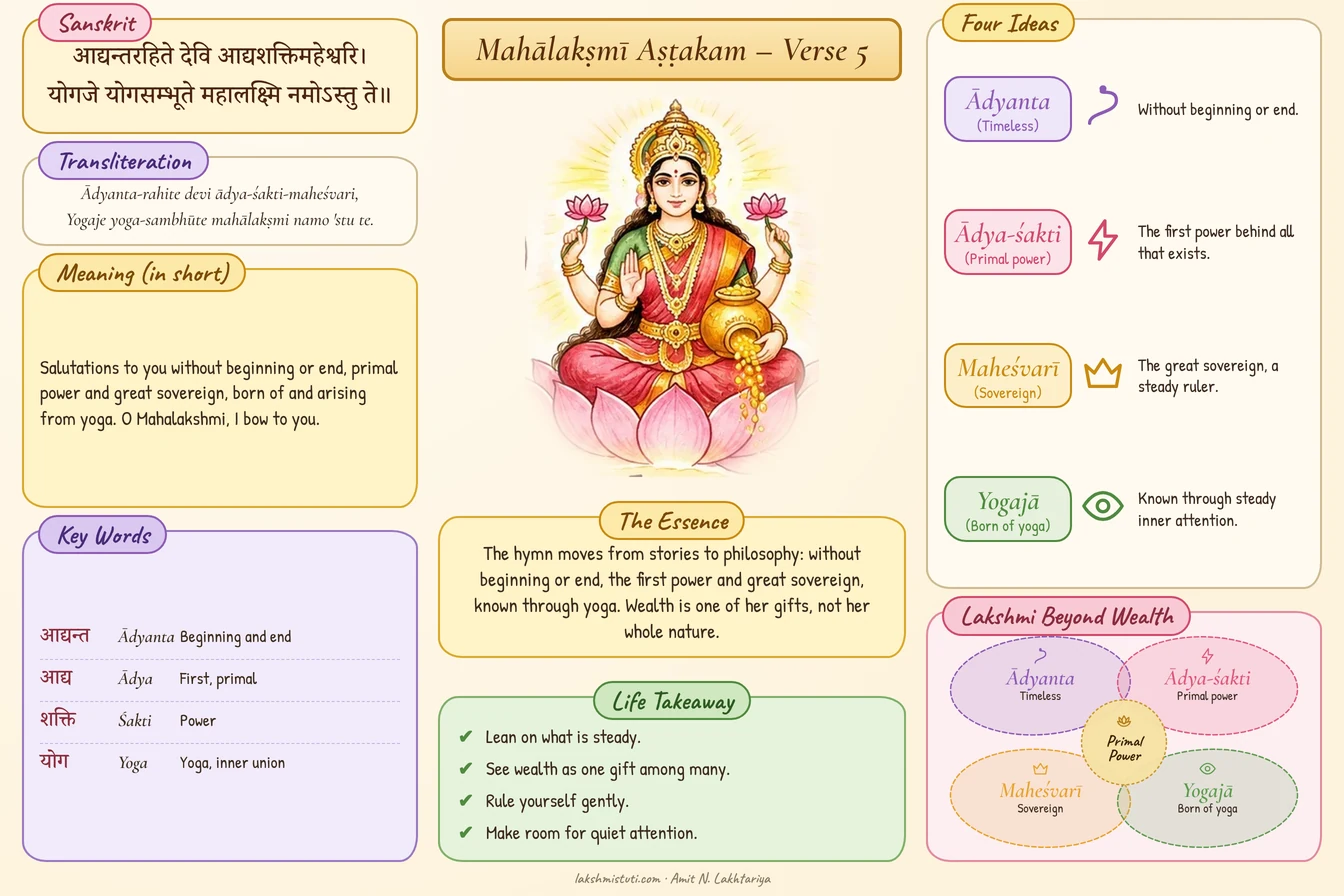
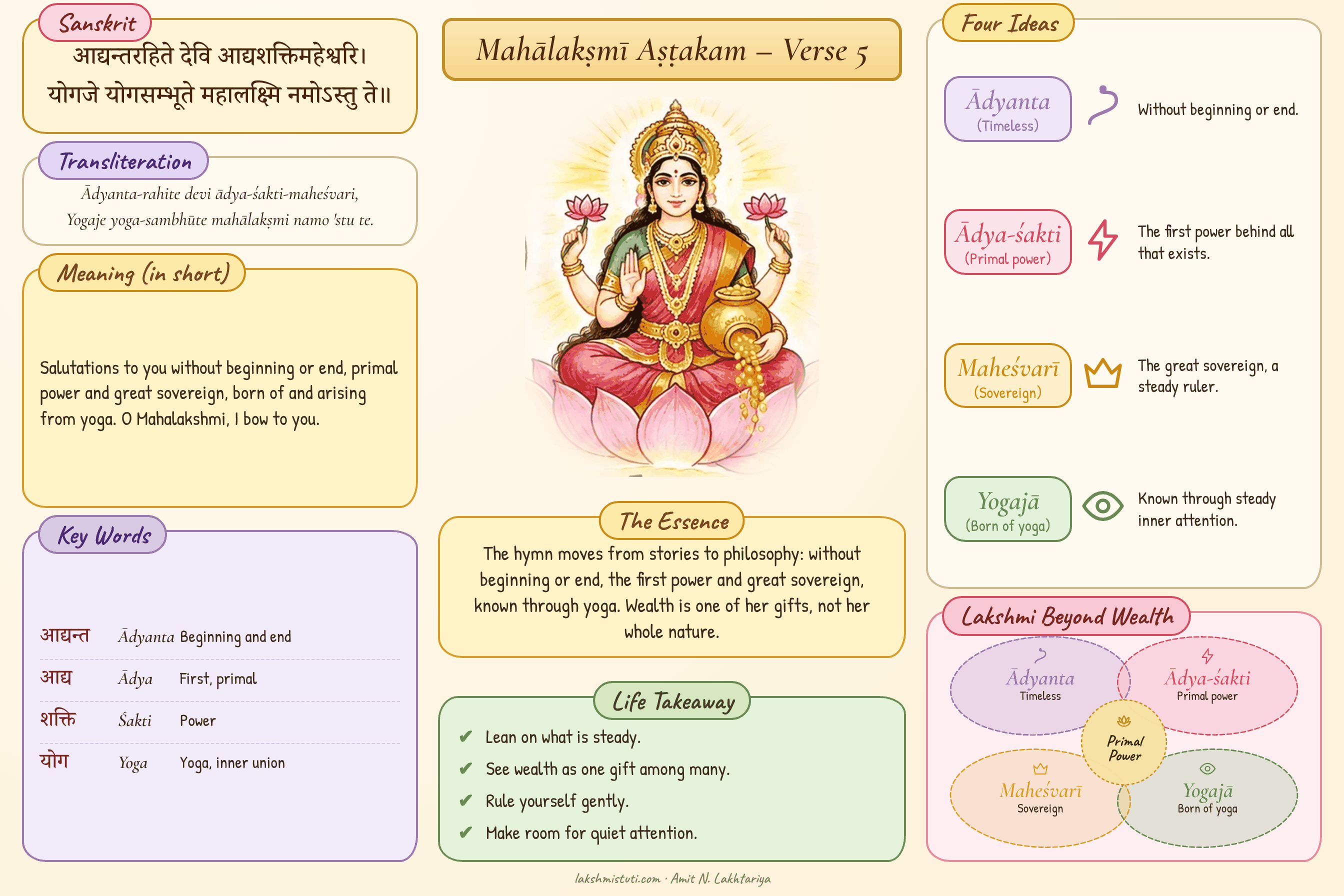
A one-page summary of the verse: Sanskrit, meaning, key ideas, key words and a takeaway. On a phone, open it full screen.
Word-by-word meaning
The literal meaning of each word.
| Sanskrit | Meaning |
|---|---|
| आद्यन्तरहितेĀdyanta-rahite | O you who are without beginning or end |
| आद्यशक्तिĀdya-śakti | Primal power |
| महेश्वरिMaheśvari | O great sovereign |
| योगजेYogaje | O you who are born of yoga |
| योगसम्भूतेYoga-sambhūte | O you who arise from yoga |
| महालक्ष्मिMahālakṣmi | O Mahalakshmi |
Notes on each word
Ādi is beginning; anta is end; rahita is without.
Ādya is first, primal; śakti is power or energy.
Īśvarī is a female ruler; mahā is great.
Born of, or known through, yoga: union and disciplined contemplation. Some editions vary this word.
Sambhūta is arisen, come into being.
The refrain.
Deeper spiritual insights
Interpretation and reflection: ideas that help us read the verse, not part of the text itself.
In simple words
With this verse the hymn moves from stories to philosophy. The Goddess is without beginning or end, the first power, the supreme sovereign, and she is known in the depths of yoga.
Lakshmi beyond wealth
Many people meet Lakshmi only as the goddess of money. This verse shows a larger picture: Mahalakshmi as the primal power behind all that exists. Wealth is one of her gifts; it is not her whole nature.
Yoga as a way of knowing
The verse says she arises from yoga. Readers differ on exactly how to read this; one natural way is that she is realised through steady, disciplined inner attention rather than through argument. It invites quieter forms of worship.
Practical meditation
- Minute 1Close your eyes and breathe.
- Minute 2Recite the verse and let “without beginning or end” stay with you.
- Minute 3Imagine a presence larger than your worries.
- Minute 4Bring that wider view back to one thing you are concerned about today.
Reflection for today
When I think of Lakshmi, do I think only of money? What changes if I think of her as the source of all well-being?
A hymn that begins with a bow and ends with the supreme power has travelled a long way in five verses. It asks us to widen our idea of what we are praying to.
This meditation is a devotional practice for attention and reflection; it does not promise a supernatural result or guarantee material wealth.