Home › Mahālakṣmī Aṣṭakam › Verse 6
The verse
॥ श्लोक ६ ॥
स्थूलसूक्ष्ममहारौद्रे महाशक्तिमहोदरे।
महापापहरे देवि महालक्ष्मि नमोऽस्तु ते॥
॥ श्री महालक्ष्म्यै नमः ॥
Sthūla-sūkṣma-mahā-raudre mahā-śakti-mahodare,
Mahā-pāpa-hare devi mahālakṣmi namo 'stu te.
Meaning in short
Salutations to you, O Goddess who are both gross and subtle and also greatly fierce, great power who contain all within you, remover of the greatest sins. O Mahalakshmi, I bow to you.
A verse of contrasts: the Goddess is seen and unseen, gentle and fierce, and holds the whole within her.
Key highlights
- Sthūla-sūkṣma Both: the gross and the subtle together
- Mahāraudrā Fierce: greatly fierce toward what harms
- Mahodara Holds all: the great womb that contains everything
- Mahā-pāpa Remover: she takes away the greatest sins
Explore the four sides
Tap a card to open its meaning and a question to carry with you.
Sthūla-sūkṣmaBoth
Sthūla is the gross, the visible, and sūkṣma is the subtle, the unseen. The Goddess is both. She is the form we can see and the energy we cannot.
Pause and reflect: What unseen thing is quietly shaping my day, such as habit, mood or trust?
MahāraudrāFierce
Lakshmi is usually shown smiling, with coins falling from her hand. This verse reminds us that the same power can be fierce toward what harms. Taking both seriously keeps devotion from becoming sentimental.
Pause and reflect: Where do I need to be firm to protect what I care for?
MahodaraHolds all
Editions differ on this word: mahodare (of great belly, containing all) and mahodaye (of great prosperity). This site follows mahodare. Either way, the idea is greatness and fullness.
Pause and reflect: Do I leave room in my life for everything that belongs to it?
Mahā-pāpaRemover
The verse ends with the remover of the greatest sins. After the fierceness comes cleansing, so the power is in service of setting right and not of punishing.
Pause and reflect: What would I like to set right, in a small way, this week?
Sketch note
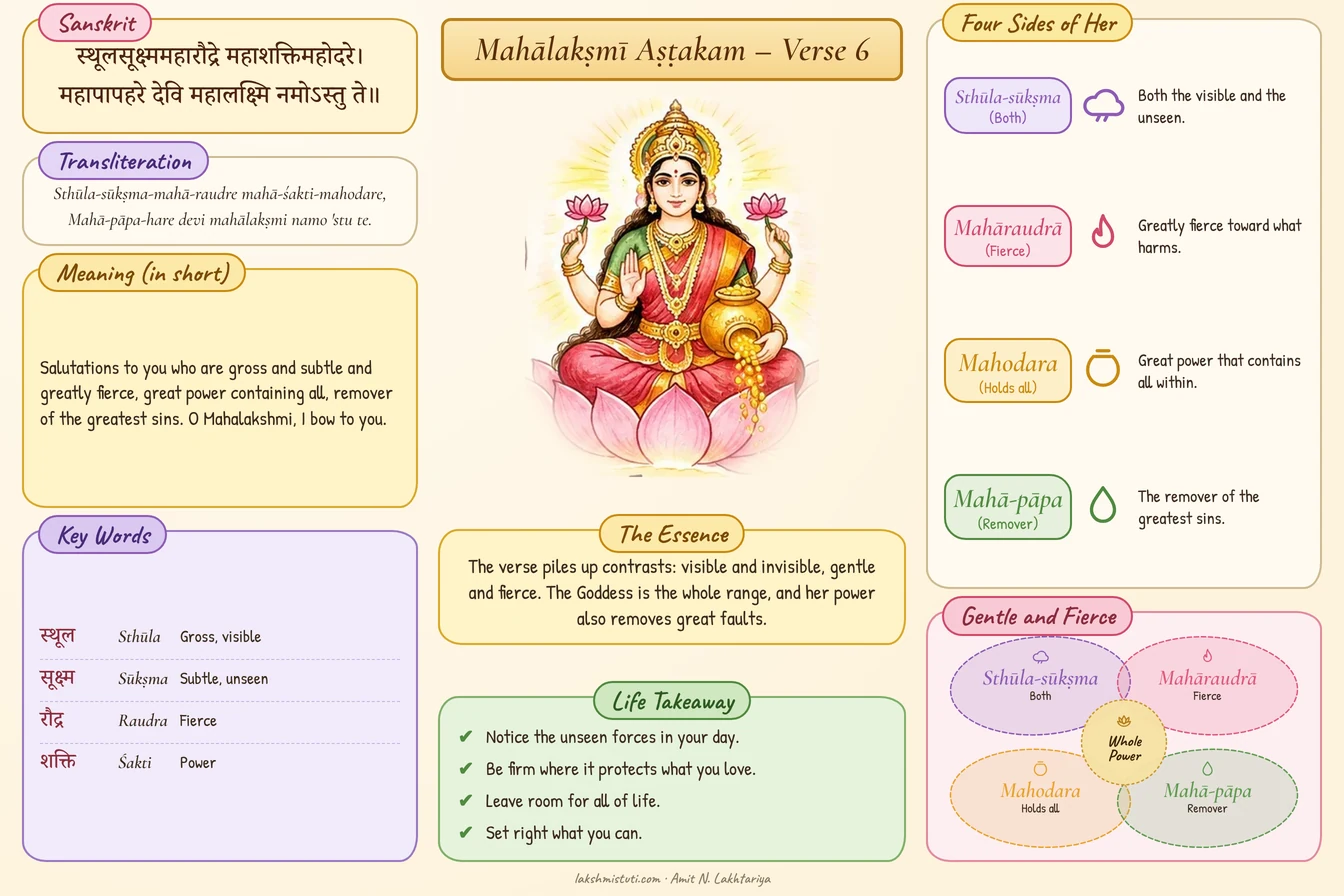
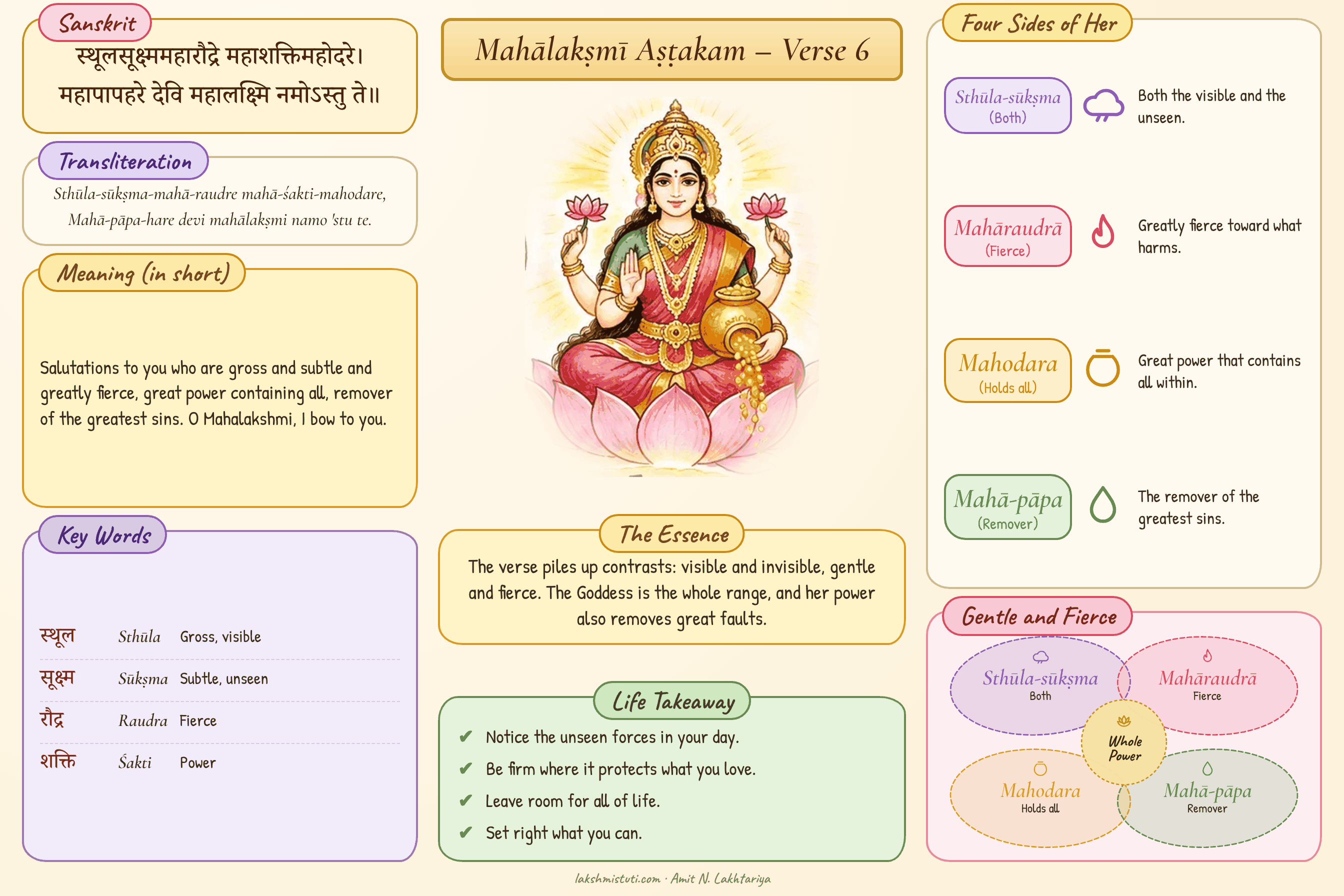
A one-page summary of the verse: Sanskrit, meaning, key ideas, key words and a takeaway. On a phone, open it full screen.
Word-by-word meaning
The literal meaning of each word.
| Sanskrit | Meaning |
|---|---|
| स्थूलसूक्ष्ममहारौद्रेSthūla-sūkṣma-mahā-raudre | O you who are gross, subtle and greatly fierce |
| महाशक्तिMahā-śakti | Great power |
| महोदरेMahodare | O you of great womb, who contain all |
| महापापहरेMahā-pāpa-hare | O remover of great sins |
| देवि महालक्ष्मिDevi mahālakṣmi | O Goddess Mahalakshmi |
Notes on each word
Sthūla is gross or visible; sūkṣma is subtle; raudra is fierce, terrible.
Śakti is power or energy.
Literally “of the great belly”: she holds the whole universe within her. Some editions read mahodaye, “of great rise or prosperity”.
Mahā is great; pāpa is sin or fault; hara is remover.
Vocatives.
Deeper spiritual insights
Interpretation and reflection: ideas that help us read the verse, not part of the text itself.
In simple words
The verse piles up contrasts: visible and invisible, and fierce as well as nurturing. The point is that the Goddess is not one thing. She is the whole range, from the form we can see to the energy we cannot.
Gentle and fierce
Lakshmi is usually shown smiling, with coins falling from her hand. This verse reminds us that the same power can be fierce toward what harms. Taking both seriously keeps devotion from becoming sentimental.
A note
A note on the variant reading
Editions differ on the third pāda: mahodare (of great belly, containing all) and mahodaye (of great prosperity or rise). Either way the idea is greatness and fullness. We follow the more widely printed mahodare.
Practical meditation
- Minute 1Still the body.
- Minute 2Recite the verse slowly.
- Minute 3Notice both the visible and the unseen in your day: what you can count, and what you cannot.
- Minute 4Sit with the thought that both are part of one life.
Reflection for today
What in my life is measurable, and what matters just as much but cannot be measured? Am I giving the second kind its share of attention?
Gross and subtle, gentle and fierce: the verse refuses to shrink the Goddess to one picture. That is a good habit for a reader, too.
This meditation is a devotional practice for attention and reflection; it does not promise a supernatural result or guarantee material wealth.