Home › Śrī Sūktam › Verse 16
The verse
॥ ऋचा १६ ॥
यः शुचिः प्रयतो भूत्वा जुहुयादाज्यमन्वहम्।
श्रियः पञ्चदशर्चं च श्रीकामः सततं जपेत्॥
॥ श्री महालक्ष्म्यै नमः ॥
Yaḥ śuciḥ prayato bhūtvā juhuyād ājyam anvaham,
Śriyaḥ pañcadaśarcaṁ ca śrīkāmaḥ satataṁ japet.
Meaning in short
The person who becomes pure and self-restrained, offers ghee into the sacred fire every day, and recites the fifteen verses of the Śrī Sūktam with faith, receives the special grace of Śrī Lakshmi. Such a person gains both material and spiritual prosperity.
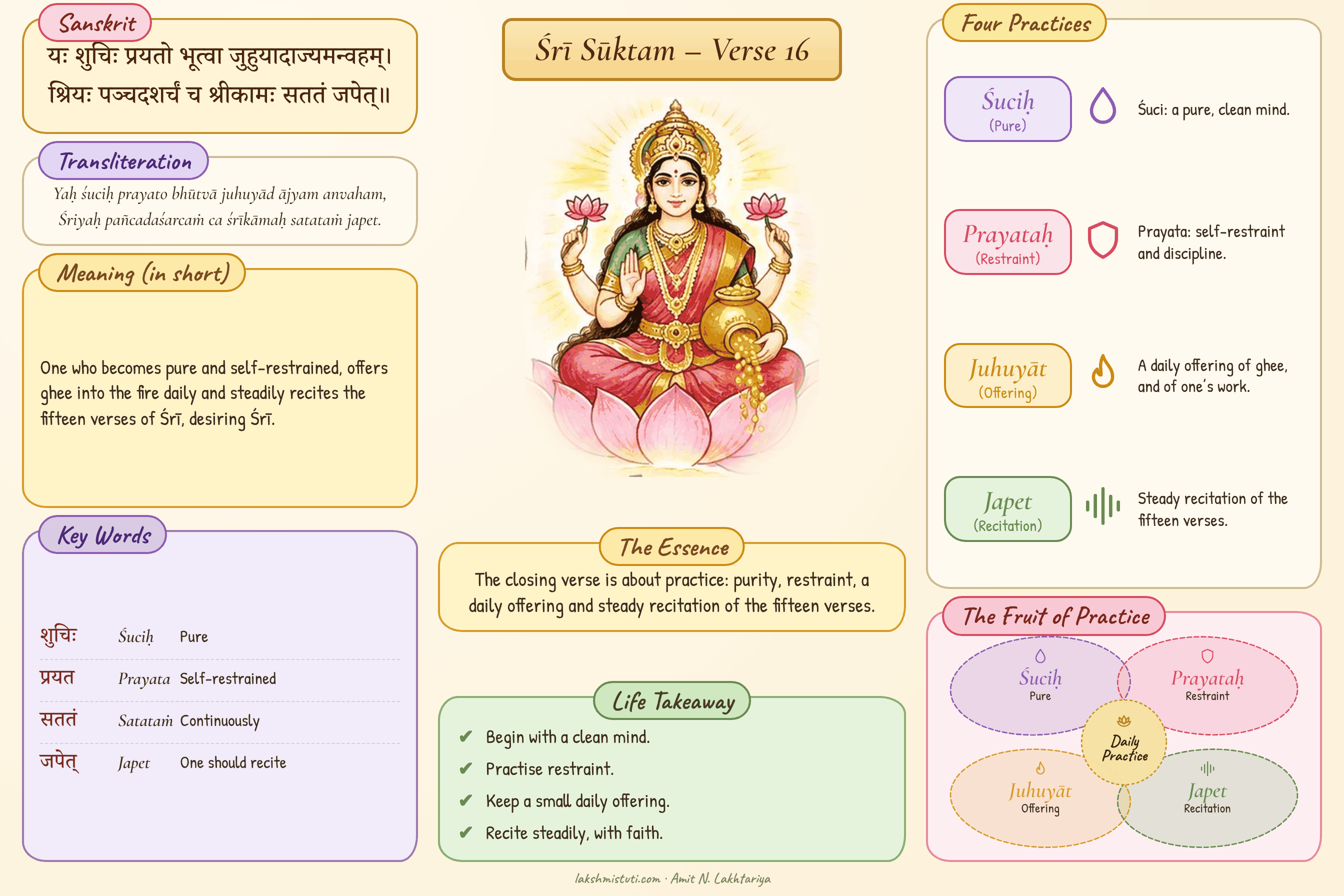
The closing verse is about practice: purity, restraint, daily offering and steady recitation, as the tradition describes it.
Key highlights
- Śuciḥ Pure: a clean mind and clean conduct
- Prayataḥ Restraint: self-control and discipline
- Juhuyāt Offering: ghee into the fire, every day
- Japet Recitation: the fifteen verses, steadily
Explore the four practices
Tap a card to open its meaning and a question to carry with you.
ŚuciḥPure
Śuci means pure. The verse begins with the person, not the request: a clean mind and clean conduct come first, according to the closing verse.
Pause and reflect: What small thing would make my mind feel cleaner today?
PrayataḥRestraint
Prayata is self-restrained. The commentary says discipline, self-restraint and pure conduct are what make Lakshmi’s grace lasting, more than asking alone.
Pause and reflect: Where would a little restraint serve me better than more effort?
JuhuyātOffering
Juhuyāt ājyam anvaham: offer ghee into the sacred fire every day. The commentary reads it as a daily practice that includes offering one’s own duty and work with true faith.
Pause and reflect: What is my daily offering, in work or in care for others?
JapetRecitation
Japet means one should recite, and satataṁ means continuously. The fifteen verses are to be recited steadily, so the emphasis is on regularity.
Pause and reflect: What rhythm of practice could I keep up for a month?
Sketch note
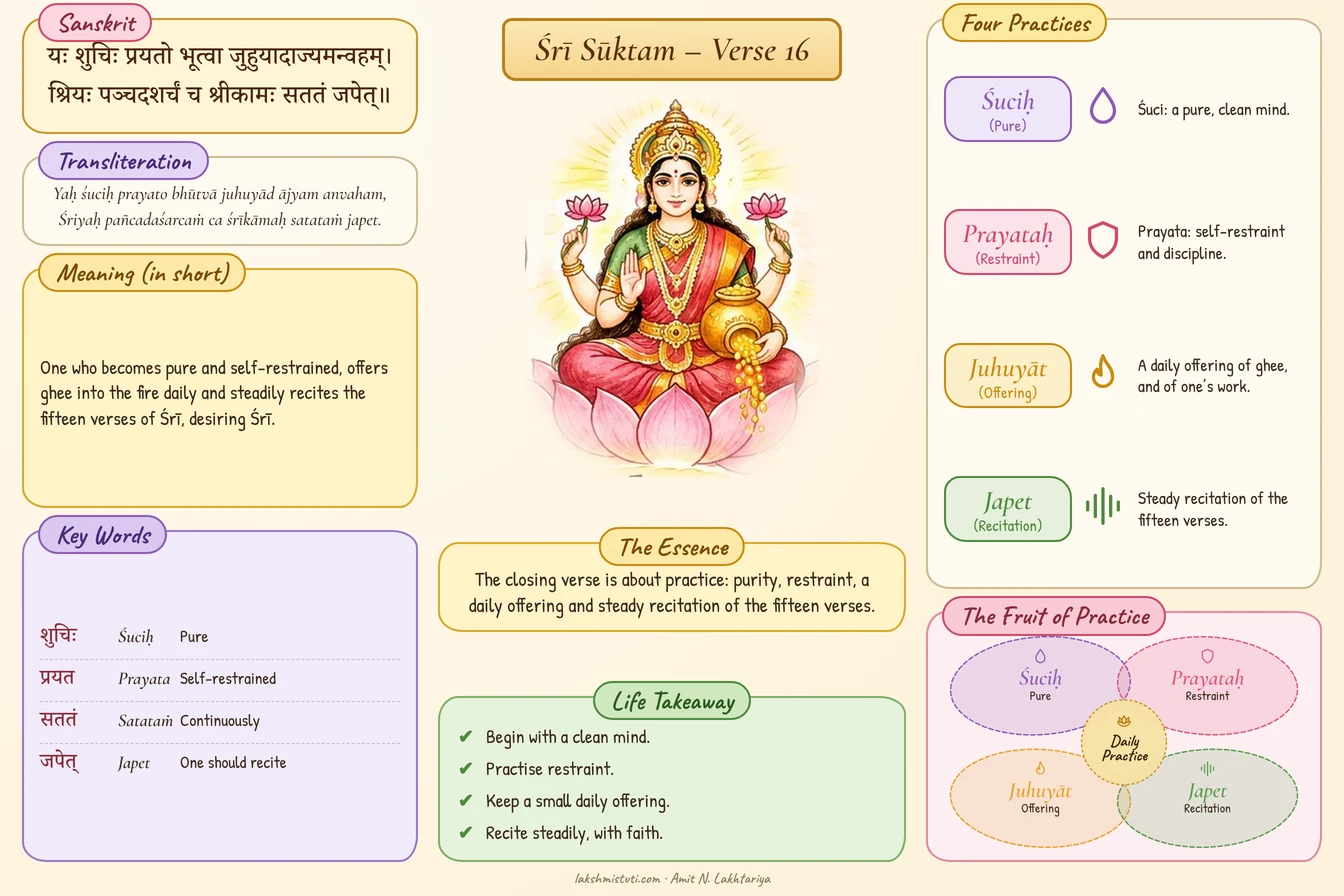
A one-page summary of the verse: Sanskrit, meaning, key ideas, key words and a takeaway. On a phone, open it full screen.
Word-by-word meaning
The literal meaning of each word.
| Sanskrit | Meaning |
|---|---|
| यः शुचिः प्रयतः भूत्वाYaḥ śuciḥ prayataḥ bhūtvā | One who, becoming pure, with a clean mind and self-restraint |
| जुहुयात् आज्यम् अन्वहम्Juhuyāt ājyam anvaham | Should offer ghee into the sacred fire every day |
| श्रियः पञ्चदशर्चं चŚriyaḥ pañcadaśarcaṁ ca | And the fifteen verses of the Śrī Sūktam |
| श्रीकामः सततं जपेत्Śrīkāmaḥ satataṁ japet | One who desires Lakshmi should keep reciting it continuously |
Notes on each word
The daily fire offering (agnihotra).
Recited every day.
Deeper spiritual insights
Interpretation and reflection: ideas that help us read the verse, not part of the text itself.
More than asking
This closing part does not teach us only to ask. It tells us that discipline, self-restraint and pure conduct are what make Mother Lakshmi’s grace lasting.
A daily practice
It says that for Lakshmi there must be a daily practice: a pure heart, regular recitation, the offering of one’s own duty and work, and true faith.
Practical meditation
- Close your eyes.
- Imagine Mother Lakshmi, calm and gentle, surrounded by a golden glow, seated in the temple of your heart.
- At her feet are lotuses, and from her hands a steady stream of gold, knowledge and peace flows into your life.
- Say softly: “O Mother Lakshmi, make me worthy of pure conduct, self-restraint, good deeds and your continuous grace.”
Mother Lakshmi is not called by words alone. To call her we need clean conduct, a disciplined life, service, good company and daily practice. Then she not only comes; she stays.