Home › Śrī Sūktam › Verse 1
The verse
॥ ऋचा १ ॥
हिरण्यवर्णां हरिणीं सुवर्णरजतस्रजाम्।
चन्द्रां हिरण्मयीं लक्ष्मीं जातवेदो म आवह॥
॥ श्री महालक्ष्म्यै नमः ॥
Hiraṇyavarṇāṁ hariṇīṁ suvarṇa-rajata-srajām,
Chandrāṁ hiraṇmayīṁ Lakṣmīṁ jāta-vedo ma āvaha.
Meaning in short
O Jātaveda (sacred fire, knower of all births), I humbly request you to invite into my life the golden-hued, graceful, gentle Goddess Lakshmi, who is adorned with garlands of gold and silver, who radiates serenity like the soft glow of the moon. May she gracefully enter my life, bestowing purity, peace, prosperity and spiritual harmony.
Before asking for anything, the hymn describes her: golden, gentle, garlanded and moon-bright.
Key highlights
- Hiraṇyavarṇā Golden: the glow of purity and auspiciousness
- Hariṇī Gentle: grace and softness, like a deer
- Garland Adorned: gold and silver, sun and moon together
- Chandrā Moon-like: shining, gladdening and serene
Explore the four glimpses
Tap a card to open its meaning and a question to carry with you.
HiraṇyavarṇāGolden
Hiraṇyavarṇā means golden-coloured. In the commentary the gold stands for spiritual light, purity and auspiciousness more than for metal. The hymn begins with how she looks, not with what we want.
Pause and reflect: Do I begin my day by noticing what is good, or what is missing?
HariṇīGentle
Hariṇī is read here as “deer-like”: gentle, graceful and swift. Other commentators hear “golden-yellow” or “she who takes away sorrow”. The three readings sit comfortably together.
Pause and reflect: Where in my life could a gentler way work better than force?
GarlandAdorned
The garland of gold and silver pairs the colour of the sun with the colour of the moon. In the commentary it speaks of material and spiritual prosperity held together.
Pause and reflect: Can I hold ambition and calm together in the same day?
ChandrāMoon-like
Chandrā means shining and gladdening, like the moon. The commentary reads her radiance as serene and balanced: it cools the mind and relieves stress instead of dazzling.
Pause and reflect: Do the people around me feel calmer in my company?
Sketch note
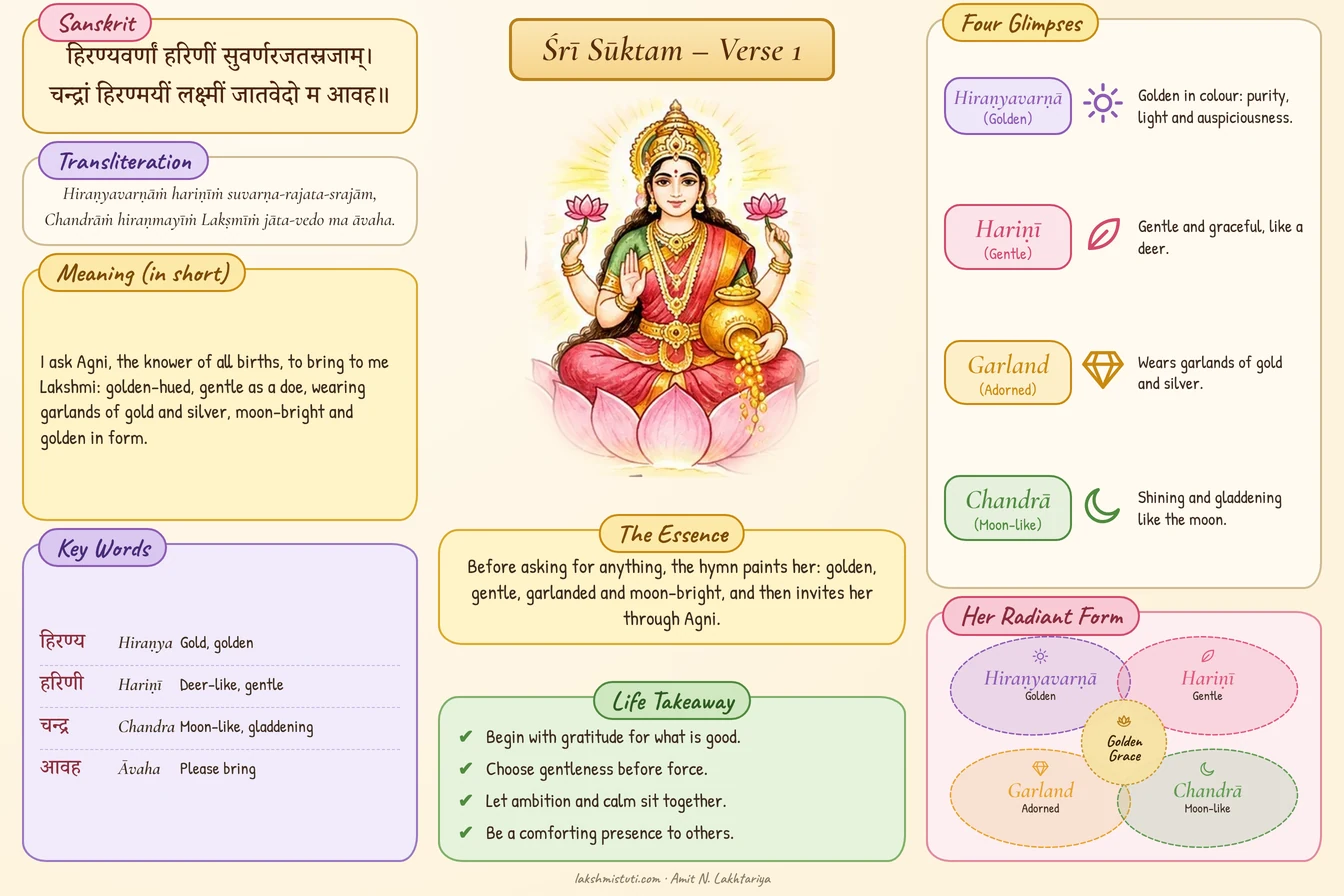
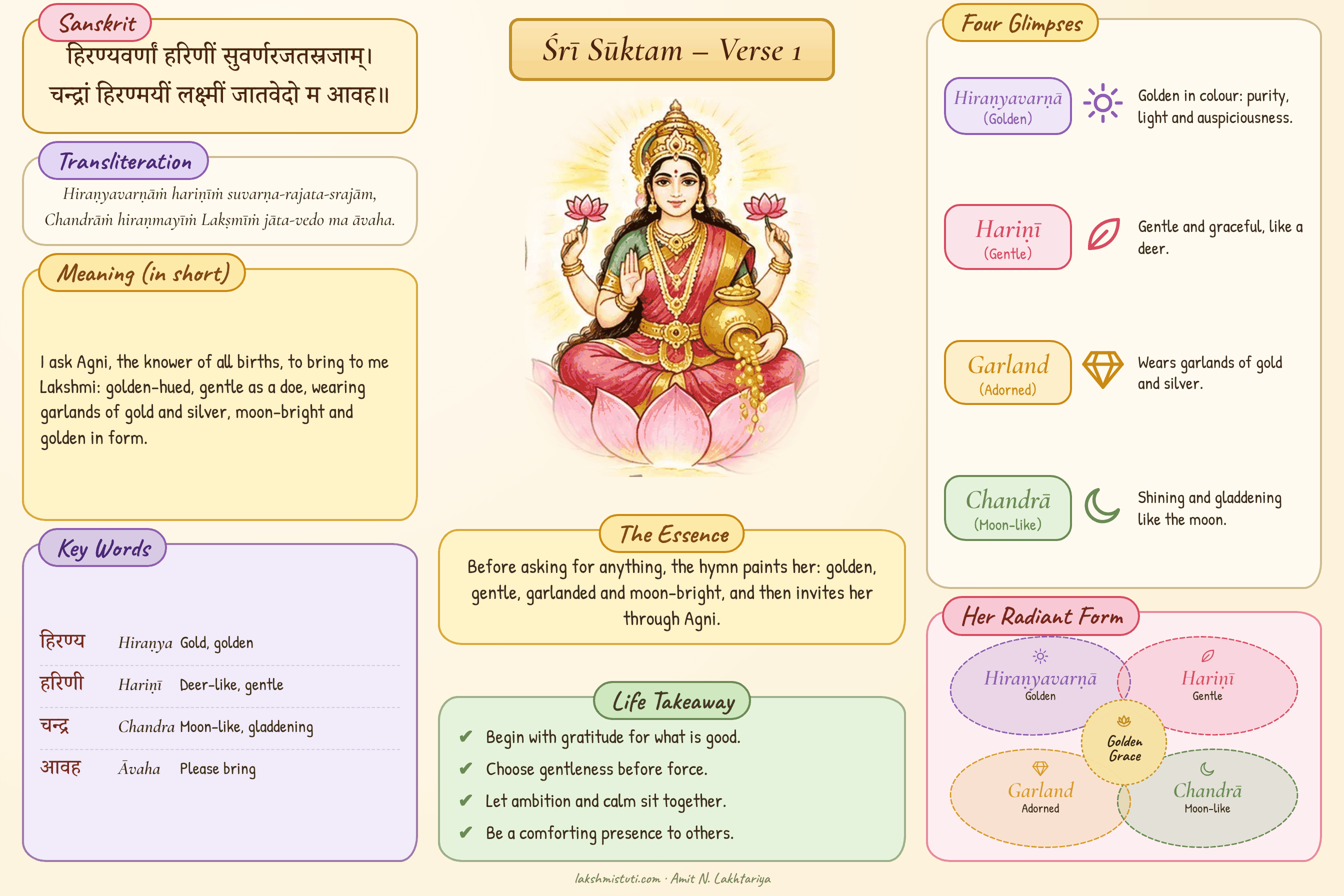
A one-page summary of the verse: Sanskrit, meaning, key ideas, key words and a takeaway. On a phone, open it full screen.
Word-by-word meaning
The literal meaning of each word.
| Sanskrit | Meaning |
|---|---|
| हिरण्यवर्णांHiraṇyavarṇāṁ | Golden-colored one |
| हरिणींHariṇīṁ | Resembling a deer (doe) |
| सुवर्णरजतस्रजाम्Suvarṇa-rajata-srajām | Wearing garlands of gold and silver |
| चन्द्रांChandrāṁ | Shining and gladdening, moon-like |
| हिरण्मयीं लक्ष्मींHiraṇmayīṁ Lakṣmīṁ | The golden form of Goddess Lakshmi |
| जातवेदो म आवहJātavedo ma āvaha | O Jātaveda (Fire, Agni), please invite or bring her to me |
Notes on each word
The golden glow stands for spiritual illumination, purity and auspiciousness.
Gentle and graceful: it points to gentleness, beauty, purity and swiftness. This commentary follows the deer reading. Other commentators read hariṇī as “golden-yellow” (from hari, tawny gold), or as “she who takes away” sorrow and poverty. The three readings sit comfortably together.
Suvarṇa = gold, rajata = silver, sraj = a garland or wreath. It speaks of richness, prosperity, brilliance, divine radiance and cosmic abundance. Gold is the colour of the sun and silver of the moon, which prepares the way for Chandrāṁ in the next word.
The root of candra means both “to shine” and “to delight”, and the moon is called candra because it gladdens the heart. So the word carries coolness, soothing grace, serenity, beauty and balanced emotions, together with the joy she brings.
Divine abundance, prosperity and spiritual richness. Note the difference from the first word: hiraṇya-varṇā is golden in colour, in appearance, while hiraṇmayī is golden in substance, made of gold. She is golden both in how she appears and in what she is.
Jātaveda means “one who knows all births”. Agni is the mediator who carries our prayers to the Divine.
Deeper spiritual insights
Interpretation and reflection: ideas that help us read the verse, not part of the text itself.
Gentleness (Hariṇīṁ)
True abundance and fulfilment are drawn not through harsh pursuit but through gentleness, grace and purity of heart.
The gold and silver garland
Balanced material and spiritual prosperity: gold stands for worldly success, silver for emotional and spiritual wisdom.
Moon-like radiance (Chandrāṁ)
Real prosperity is serene, calm and balanced. It cools the mind, relieves stress and brings peace.
The role of Agni (Jātaveda)
You are not alone on the journey. You ask the divine forces, with Agni as messenger, to guide you and connect you with universal abundance.
Where this hymn comes from
The Śrī Sūktam is a khila, a supplement to the Ṛgveda. In the Vedic tradition Agni is the one who carries offerings from the sacrificial fire to the gods, which is why the hymn begins by addressing him as Jātavedas. In the traditional worship of Lakshmi this first verse is commonly used as the invocation, the moment of inviting the Goddess to be present. Reading it that way, the verse is not a request for a distant favour but a formal welcome.
Practical meditation
- After chanting, visualise Goddess Lakshmi vividly.
- Imagine her radiant form, golden like sunrise, her eyes full of compassionate gentleness, like those of a deer.
- Feel the serenity of moonlight radiating from her presence into your heart.
- Allow the image to settle gently, gradually replacing anxieties or fears with calmness and confidence.
Reflection for today
Through the day, quietly remind yourself of gentleness, grace, clarity and balance, the qualities symbolised by Lakshmi. Notice how these qualities subtly influence your interactions, choices and responses.
This first verse isn’t merely a chant. It is an invitation to the Divine, an invitation to nurture a gentle yet radiant heart that attracts true prosperity effortlessly. May your journey today become profoundly meaningful, peaceful, and enriching!