Home › Śrī Sūktam › Verse 11
The verse
॥ ऋचा ११ ॥
कर्दमेन प्रजाभूता मयि सम्भव कर्दम।
श्रियं वासय मे कुले मातरं पद्ममालिनीम्॥
॥ श्री महालक्ष्म्यै नमः ॥
Kardamena prajā-bhūtā mayi sambhava kardama,
Śriyaṁ vāsaya me kule mātaraṁ padma-mālinīm.
Meaning in short
By the power of Kardama, the force of fertility and creation, may abundance arise within me. May Goddess Lakshmi, adorned with a garland of lotuses, take permanent residence in my family, my home and my lineage as a nurturing mother.
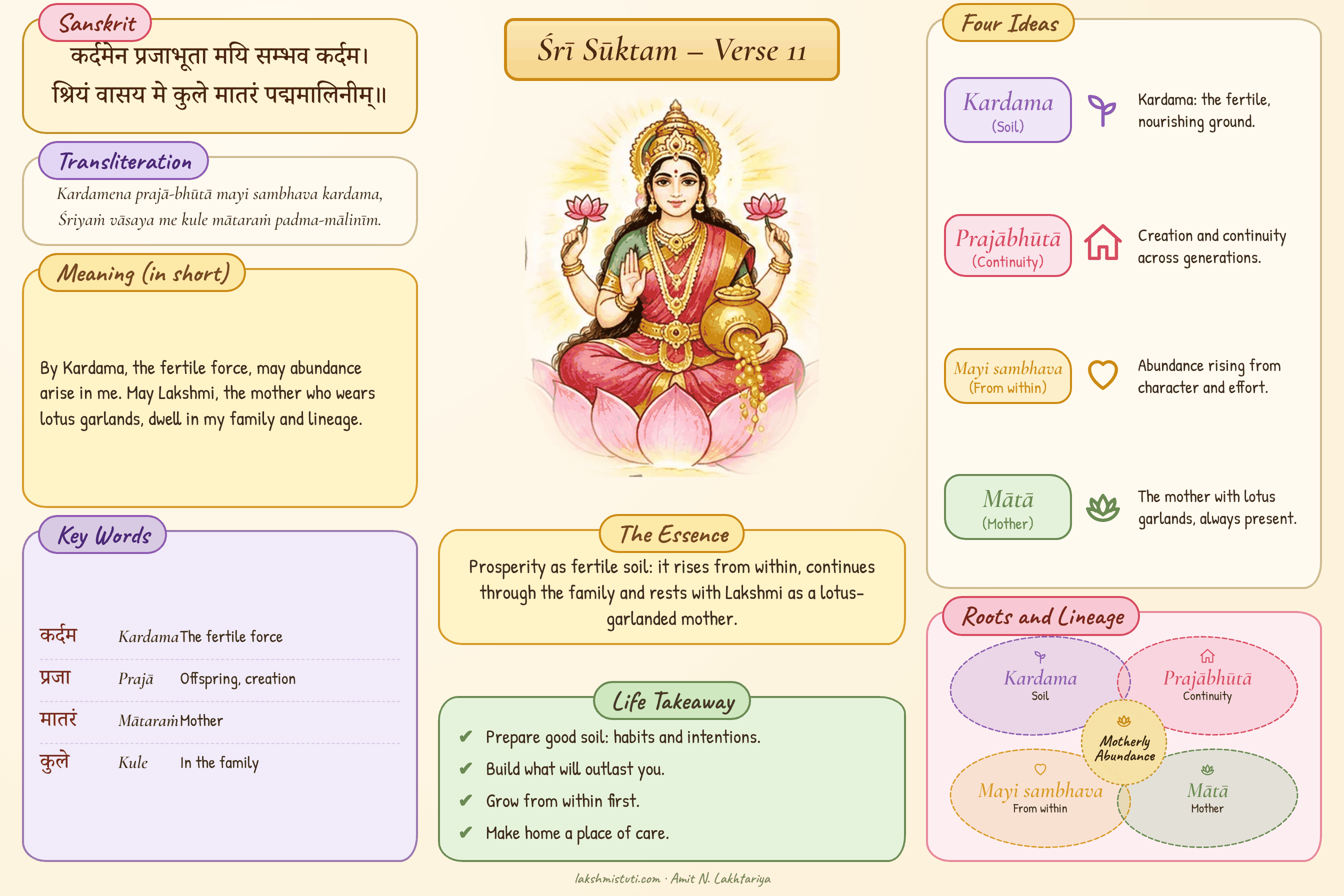
Prosperity as fertile soil: it rises from within, continues through the family and rests with a motherly Lakshmi.
Key highlights
- Kardama Soil: the fertile ground of effort and grace
- Prajābhūtā Continuity: creating for future generations
- Mayi sambhava From within: abundance rising from character
- Mātā Mother: Lakshmi with a lotus garland, ever present
Explore the four ideas
Tap a card to open its meaning and a question to carry with you.
KardamaSoil
Kardama is the sacred, fertile force, read as the nourishing soil of effort, intention and grace. Good things grow only in prepared ground.
Pause and reflect: What kind of soil am I preparing with my thoughts and actions?
PrajābhūtāContinuity
Prajābhūtā: having given rise to progeny and creation. In the commentary, prosperity is not only for oneself; it creates, multiplies and nourishes future generations.
Pause and reflect: What am I building that others will still benefit from?
Mayi sambhavaFrom within
Mayi sambhava: arise within me. The commentary reads abundance as coming not only from outside but from character, conduct, intention and effort.
Pause and reflect: Which quality in myself would most help abundance take root?
MātāMother
Mātaraṁ padma-mālinīm: the mother, wearing a garland of lotuses. She is soft, nurturing and permanently present, and the verse asks her to dwell in family and lineage.
Pause and reflect: How can I make my home a place where care can settle?
Sketch note
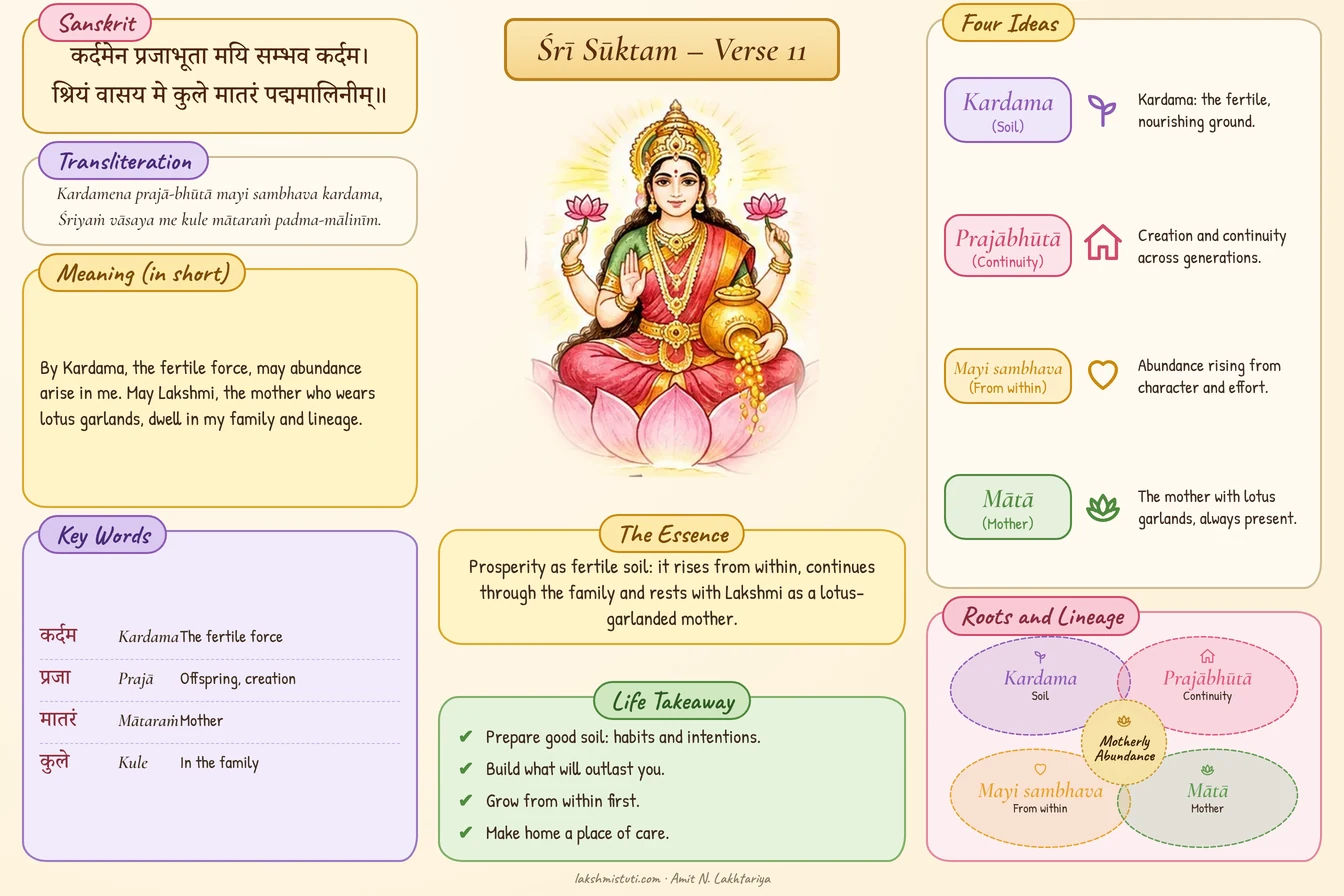
A one-page summary of the verse: Sanskrit, meaning, key ideas, key words and a takeaway. On a phone, open it full screen.
Word-by-word meaning
The literal meaning of each word.
| Sanskrit | Meaning |
|---|---|
| कर्दमेनKardamena | By Kardama (symbolic of sacred fertility and abundance) |
| प्रजाभूताPrajābhūtā | Having given rise to progeny, creation, abundance, flourishing life |
| मयि सम्भवMayi sambhava | Be present within me; arise in my life |
| कर्दमKardama | O divine force of fertility and abundance! |
| श्रियं वासय मे कुलेŚriyaṁ vāsaya me kule | May Goddess Lakshmi reside in my family, lineage and home |
| मातरं पद्ममालिनीम्Mātaraṁ padma-mālinīm | The motherly form of Lakshmi, adorned with a garland of lotuses |
Notes on each word
In Vedic lore, Kardama is associated with fertile earth and the nourishing power of creation. The word literally means mud or fertile soil. Many commentators also take Kardama as a sage, regarded as a son of Lakshmi, whom the verse asks to bring his mother to dwell in the family.
Lotuses here represent beauty, purity and divine presence.
Deeper spiritual insights
Interpretation and reflection: ideas that help us read the verse, not part of the text itself.
Kardama: the sacred, fertile force
It symbolises the pure, nourishing soil of effort, intention and divine grace. Reflection: am I cultivating the right “soil” in my actions and thoughts so that prosperity can take root and flourish?
Prajābhūtā: creation and continuity
Prosperity is not just for oneself. It creates, multiplies and nourishes future generations.
Mayi sambhava: let abundance arise within me
Not from outside only, but from within, in character, conduct, intention and effort.
Lakshmi as the mother with a lotus garland
The image of Lakshmi here is soft, maternal, ever-nurturing and permanently present. This is not fleeting fortune, but motherly abundance that stays, protects and blesses.
Practical meditation
- Imagine fertile, rich earth beneath you, full of life and nourishment.
- Visualise Goddess Lakshmi, radiant and gentle, adorned with a garland of fresh pink lotuses, entering your home with grace and serenity.
- Feel her presence settling in, as a protective, loving mother who will never leave.
- Whisper: “May the seeds I plant bear divine fruit. May abundance and beauty take residence in my home and heart.”
Reflection for today
Is my daily effort like rich, fertile soil, prepared for abundance to grow? How am I ensuring that my success and prosperity are nurturing those around me? Do I welcome beauty, grace and order in my surroundings, making my home a place where abundance wants to stay?
This verse teaches that prosperity comes when we cultivate fertile conditions (effort, clarity and generosity) and invite abundance not as a guest, but as a motherly presence who stays and nurtures.